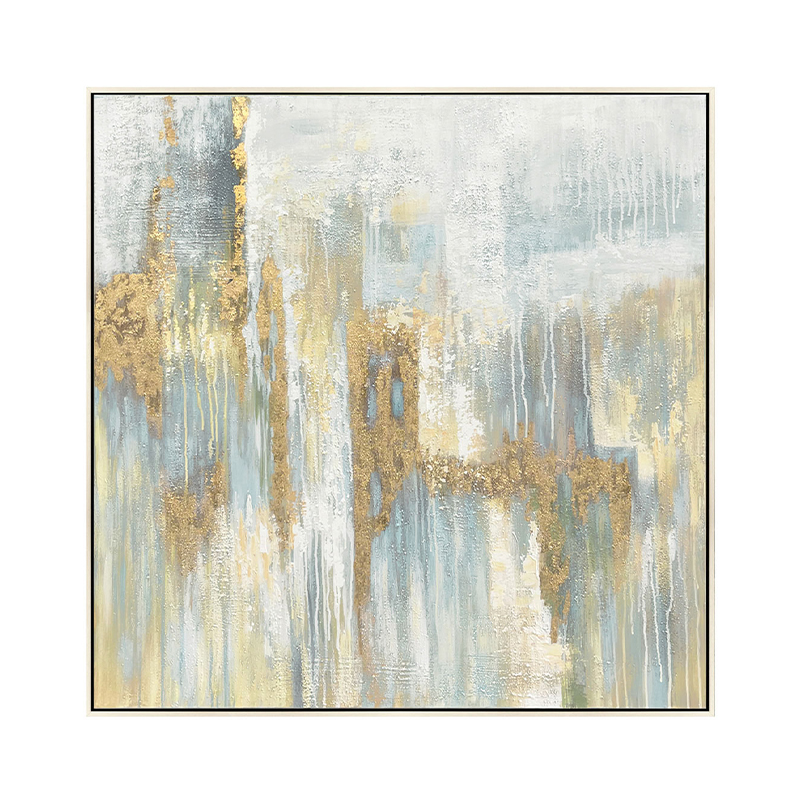
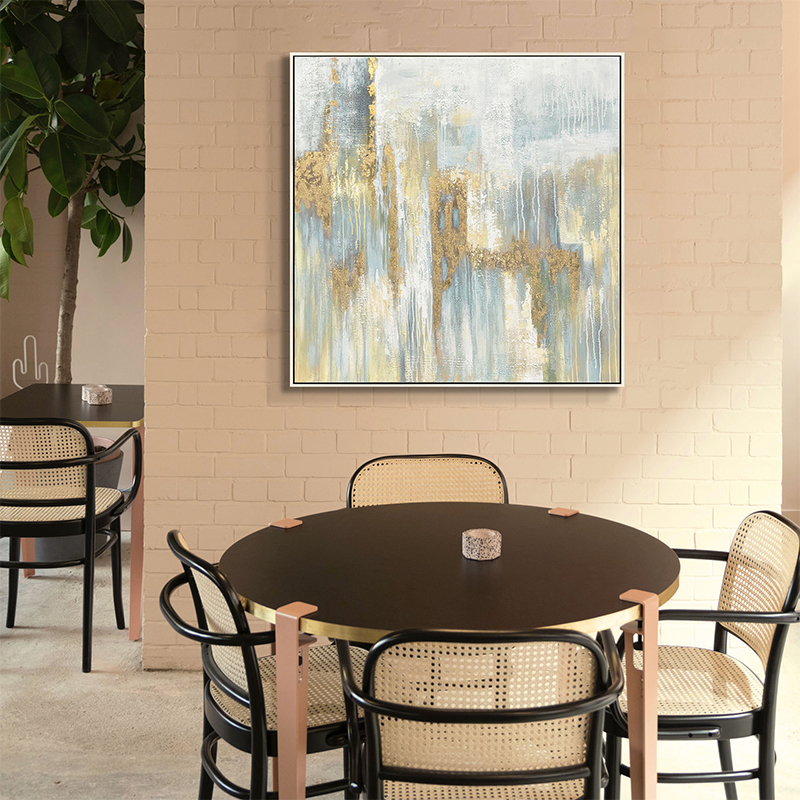
Does the creative process of abstract painting rely more on the artist's intuition and subconscious than that of figurative painting?
Publish Time: 2025-12-17
In the development of modern art, abstract painting, with its unique language of departing from realistic objects and emphasizing form and emotional expression, has become one of the most revolutionary art forms of the 20th century. Because it does not aim at "representation," it is often believed that the creation of abstract painting relies more on the artist's intuition and subconscious.
1. Abstract Painting: An Explicit Channel for Intuition and Subconsciousness
The core characteristic of abstract painting lies in abandoning the direct imitation of the objective world, instead conveying inner experience through purely visual elements such as color, line, texture, and composition. This shift naturally weakens the constraints of rational planning and external references, making it easier for the artist to enter a creative state "from the inside out."
2. Figurative Painting: Emotional Penetration within a Rational Framework
In contrast, figurative painting usually needs to follow objective rules such as proportion, perspective, and anatomy, and unfolds a narrative or depiction around a specific theme. This makes it seem more reliant on rational control on the surface. However, truly outstanding figurative works are by no means mechanical reproductions of reality.
The profound depth of the eyes in Rembrandt's portraits, the trembling of the wheat fields in Van Gogh's paintings, the texture of the skin in Freud's figure paintings—these breathtaking details often stem from the artist's keen intuition about the mental state of the subject or their own emotions. Even in the drawings of classical masters like Leonardo da Vinci, traces of dynamism and vitality can be seen captured intuitively. Furthermore, Surrealist painters like Dalí and Magritte actively explored dreams and the subconscious, meticulously embedding them into figurative scenes. Thus, figurative painting also relies heavily on intuition and the subconscious, only these are cleverly "coded" within recognizable images.
3. Different Modes of Reliance, Not Degree
The key difference lies in the mode of reliance, not the absolute degree.
Abstract painting tends to allow intuition and the subconscious to dominate the entire creative process: from the first stroke to the last, the artist may not have a clear sketch, but rather adjusts the form continuously according to the flow of emotion, often resulting in an unpredictable final form. This "process as purpose" characteristic makes irrational factors highly explicit.
Figurative painting typically begins with a rational framework, but in the process, intuition intervenes in the handling of details, while the subconscious may subtly emerge in the choice of subject matter, symbolism, or atmosphere. Although its irrational elements exist, they serve the overall figurative structure, thus appearing more implicit.
In other words, abstract painting places intuition and the subconscious in the foreground, while figurative painting integrates them into the background—both are indispensable, just with different roles.
4. Individual Differences and Artistic Intent Determine Everything
It is also important to note that we cannot simply equate "abstract = intuition" or "figurative = rationality."
Some abstract artists pursue ultimate order, their creations based on rigorous philosophical speculation, where rationality far outweighs intuition; while some figurative painters deliberately distort images to release inner anxieties, their works filled with subconscious tension. Therefore, whether or not one relies on intuition and the subconscious depends more on the artist's personal temperament, aesthetic philosophy, and creative intent than on the painting form itself.
In conclusion, abstract painting, due to its formal freedom, does indeed provide a more direct and open channel for the expression of intuition and the subconscious, making it particularly prominent in the creative process. However, this does not mean that figurative painting lacks these elements. True artistic creation, whether abstract or figurative, is the result of the interweaving and symbiosis of reason and emotion, consciousness and subconsciousness. The difference lies only in this: abstract painting dares to let the inner voice speak out directly, while figurative painting tends to hide it within form and color, waiting for the viewer to listen.